

At some point in adulthood, many people quietly shelve the things they once loved doing just for the joy of it. The painting supplies get tucked away. The guitar gathers dust. The journal stays blank. Life gets full — work, responsibilities, errands — and creative pursuits start to feel like luxuries we can’t quite justify. But here’s the thing: that quiet abandonment might be costing us more than we realize.
Creative hobbies aren’t a frivolous use of time. They’re not something to return to “once things slow down.” The research, the psychology, and honestly just the lived experience of millions of adults all point to the same conclusion — making things, exploring art, and expressing yourself creatively is genuinely good for you. Not in a vague, feel-good way, but in measurable, meaningful ways that affect your mental health, your relationships, and even your physical wellbeing.
So why do so many adults treat creativity like something they’ve aged out of? And what happens when we finally stop believing that?
The Real Reason Adults Stop Being Creative
It’s worth understanding why so many people drift away from creative hobbies in the first place — because it’s rarely about a genuine loss of interest. More often, it’s a quiet accumulation of subtle pressures.
Children create without hesitation. They paint without worrying whether the painting is good. They write stories without an audience in mind. Somewhere along the way, that changes. School starts grading creative work. Adults around us frame art as a career path or a waste of time, rarely as something in between. The cultural message becomes: creativity is for people who are talented, and talent is something you either have or you don’t.
By adulthood, many people have fully internalized the idea that if they can’t do something well, there’s no point doing it at all. This perfectionism is one of the biggest barriers to creative engagement. A 2019 study published in Psychology of Aesthetics, Creativity, and the Arts found that fear of judgment — including self-judgment — was a significant predictor of creative avoidance in adults.
The irony is that the pressure to be “good” at something is what robs adults of one of its most powerful benefits: the freedom of doing something purely for the process, not the outcome.
Why Is It Important to Have Creative Hobbies?
This is one of the most common questions people ask when they’re reconsidering how they spend their free time — and it deserves a thorough answer, because the benefits are broader than most people expect.
Mental Health Benefits That Are Hard to Ignore
Creative hobbies have a well-documented relationship with improved mental health. Engaging in creative activities — whether that’s painting, knitting, writing, pottery, or playing music — activates the brain’s reward system in ways that are genuinely comparable to meditation. There’s a reason occupational therapists have used crafts and creative expression as therapeutic tools for decades.
A landmark study published in the British Journal of Occupational Therapy surveyed over 3,500 knitters and found that 81% reported feeling happier after knitting, with significant links between knitting frequency and feelings of calm, happiness, and reduced sadness. While knitting is just one example, the pattern holds across creative domains: making things helps regulate emotion.
For adults dealing with anxiety, creative hobbies offer something particularly valuable — a state of absorbed focus that quiets the mental noise. Psychologist Mihaly Csikszentmihalyi called this “flow,” a state of complete immersion in a meaningful activity where self-consciousness fades and time seems to disappear. Creative hobbies are one of the most accessible routes into that state.
Cognitive Benefits That Compound Over Time
Why is creativity important for adults, specifically? Part of the answer lies in what happens to the brain as we age. Routine is comfortable, but it’s not particularly stimulating for the brain. Creative activities, by contrast, require problem-solving, spatial reasoning, fine motor coordination, and decision-making — often all at once.
Research from the Mayo Clinic found that adults who engaged in artistic activities like painting, drawing, and sculpting in middle and older age were significantly less likely to develop mild cognitive impairment. Creative engagement doesn’t just make you feel better — it may actually help protect the brain against age-related decline.
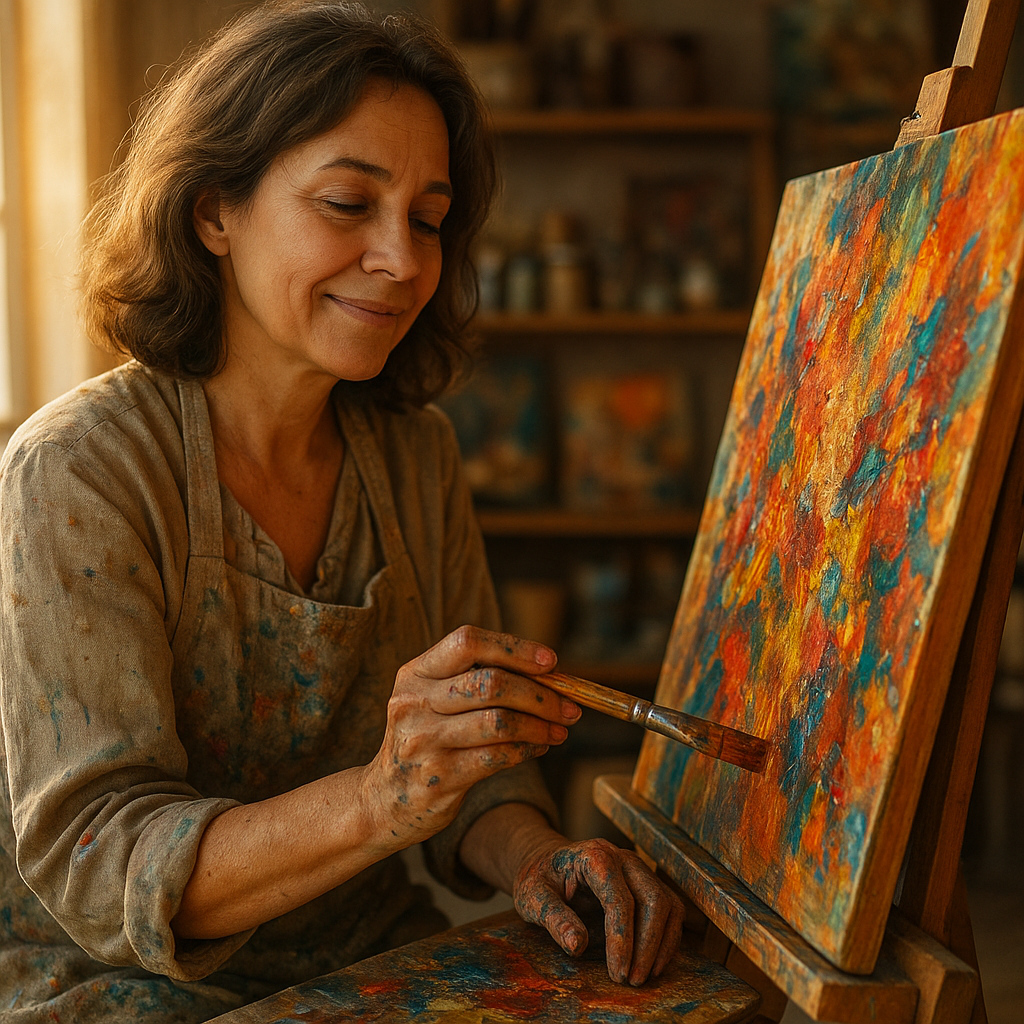
Learning a new creative skill is especially powerful because it forces the brain to build new neural connections. Picking up an instrument at 45, learning pottery at 55, or starting to sketch at 60 is genuinely good for cognitive flexibility, regardless of how “talented” you turn out to be.
Why Are Hobbies Important for Adults Beyond Just Mental Health?
The benefits of creative hobbies extend well beyond mood and cognition. They touch something deeper in the way adults experience identity, community, and purpose.
Identity and Self-Expression
Adult life has a way of flattening identity. Many people define themselves almost entirely through their roles — parent, employee, partner — and rarely through what they genuinely enjoy or create. Creative hobbies offer a way back to a more textured sense of self.
When you make something — a drawing, a meal from scratch, a knitted scarf, a piece of furniture — you’re expressing a point of view. You’re making choices about color, shape, texture, and form that are entirely your own. Over time, that practice of expression builds something: a creative identity that belongs to you outside of your job title or family role.
Social Connection
Creative hobbies have a surprising social dimension that often goes unmentioned. Pottery classes, book clubs, community choirs, crafting groups, local art societies — these are spaces where adults build genuine friendships based on shared interest rather than proximity or circumstance. That kind of elective community is increasingly rare in adult life, and increasingly important.
Loneliness among adults, particularly those over 40, is now recognized as a significant public health concern. Shared creative activities create what researchers call “social glue” — repeated, low-stakes interactions that gradually develop into real connection.
A Sense of Accomplishment Outside of Work
When your sense of achievement is entirely tied to professional metrics — promotions, performance reviews, deadlines met — you’re at the mercy of systems you don’t fully control. Creative hobbies offer an alternative source of accomplishment that is entirely self-directed. You set the goal, you do the work, you see the result. That autonomy is genuinely nourishing.
What Are the 4 C’s of Hobbies?
The “4 C’s” framework is a useful way to think about what makes a hobby genuinely fulfilling rather than just another thing to fill time. While different sources articulate them slightly differently, the core concepts tend to cluster around:
- Creativity: The hobby involves making something, solving a problem, or expressing an idea in a way that is uniquely yours.
- Challenge: It pushes you just beyond your current comfort zone, keeping you engaged and growing without being so difficult that it becomes frustrating.
- Community: It connects you with others who share the same interest, even if that connection is occasional or informal.
- Calm: It provides genuine rest and recovery — not passive consumption like scrolling, but active engagement that leaves you feeling restored.
The best creative hobbies tend to hit all four. A person who paints regularly, for example, is being creative, continually challenged by new techniques, potentially connected to a community of fellow artists, and experiencing genuine mental calm through the process. That combination is hard to replicate with passive entertainment.
Creative Hobby Ideas for Adults Who Feel Like They’re “Not Creative”
One of the most persistent myths about creative hobbies is that they require innate talent. They don’t. Creativity is a practice, not a personality trait — and there are plenty of entry points that don’t require any prior experience or ability.
Here are some genuinely accessible starting points worth exploring:
- Watercolor painting: Forgiving, affordable, and meditative. The nature of the medium means happy accidents are part of the process.
- Lino printing: A form of printmaking that requires minimal equipment and produces satisfying, repeatable results.
- Creative journaling or morning pages: Writing without an audience, purely for the process of expressing thought.
- Hand embroidery: Slow, tactile, and deeply absorbing — one of the few activities that genuinely encourages you to slow down.
- Ceramics or pottery: Increasingly accessible through local studio classes, and enormously satisfying in a physical, hands-on way.
- Collage: A low-barrier entry into visual art that requires nothing more than old magazines and glue.
- Learning an instrument: Challenging, yes — but even beginners report significant mood benefits from the practice itself.
- Photography: With a smartphone, the barrier to entry is practically zero, and the practice of looking for interesting images genuinely changes how you see the world.
The goal isn’t to find the hobby you’ll be best at. It’s to find one that pulls you in — where the doing feels worth it regardless of the result.
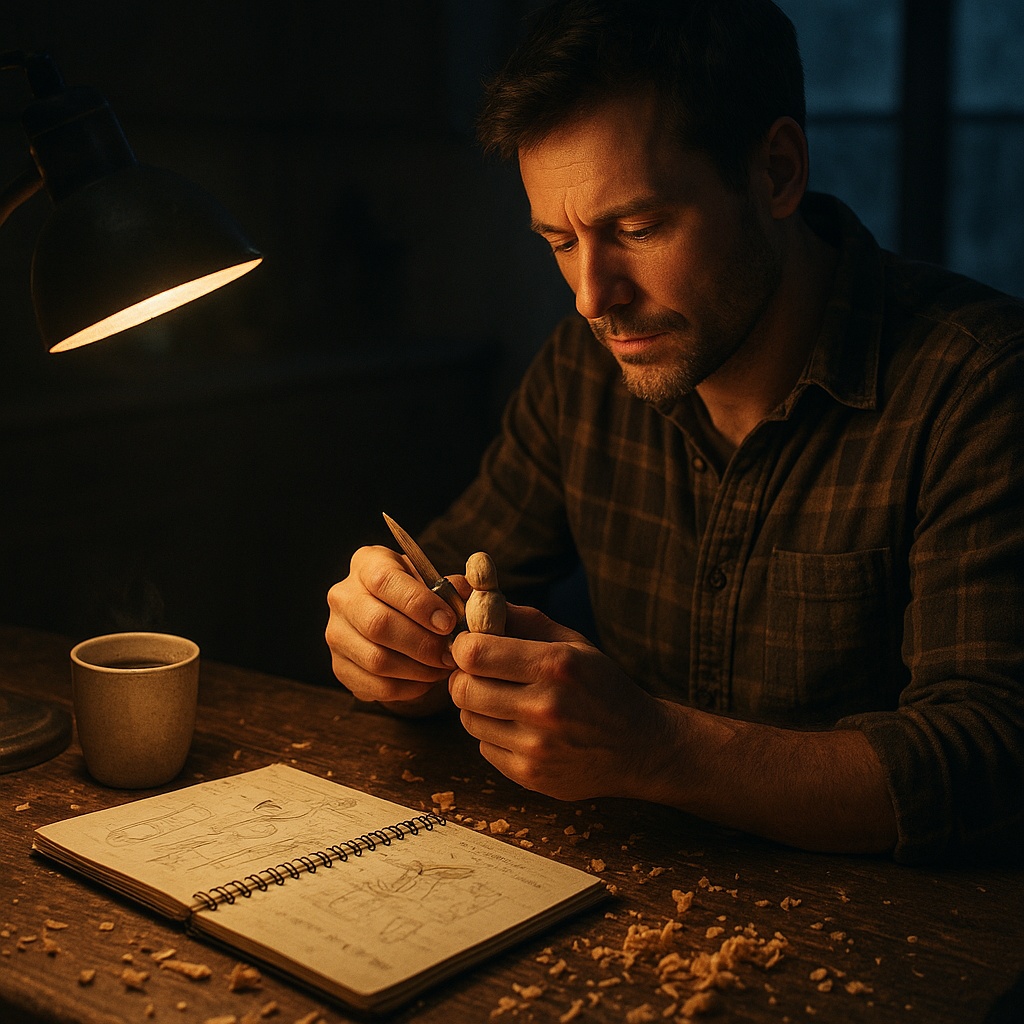
Making Time for Creativity When Life Feels Full
The most common obstacle isn’t lack of interest — it’s the sense that there simply isn’t time. This is worth examining honestly, because “I don’t have time” often really means “I haven’t decided this is a priority.”
Research on how adults actually spend their leisure time suggests that most people have more discretionary time than they perceive — they just spend significant portions of it in passive consumption (social media, television) that doesn’t produce the same restorative effects as active creative engagement.
Small shifts tend to be more sustainable than dramatic overhauls. Thirty minutes on a Sunday morning. A sketchbook kept by the bed. A class booked once a month. Creative habits, like all habits, grow more robust when they’re attached to existing routines and kept realistic in scope.
It also helps to release the outcome. You don’t need a dedicated studio, a finished portfolio, or a plan to monetize your hobby. The pressure to be productive with creativity is one of the fastest ways to kill it. The goal, especially at the beginning, is simply to show up and make something.
The Bigger Picture: Creativity as a Way of Living
There’s a broader point worth making here. The significance of creative hobbies in adult life isn’t only about individual wellness — it’s about the kind of adults, and the kind of communities, that creativity tends to produce.
People who engage regularly in creative pursuits tend to be more empathetic, more comfortable with ambiguity, and more open to seeing problems from multiple angles. These aren’t just nice qualities — they’re increasingly essential ones in a world that demands adaptability.
Creative engagement also tends to cultivate a healthier relationship with failure. When you paint something that doesn’t work, you learn from it and try again. When a piece of writing falls flat, you revise. The creative process is inherently iterative, and adults who practice it regularly develop a resilience that transfers well beyond the studio or the writing desk.
Final Thoughts
Creative hobbies aren’t a reward for when life gets easier, or a nostalgic return to childhood pastimes. They’re a meaningful, evidence-backed part of living well as an adult — supporting mental health, protecting cognitive function, building social connection, and nurturing a richer sense of self.
The case for creative hobbies in adulthood is strong, and the barriers to entry are lower than most people think. You don’t need talent, time, or a perfectly equipped space. You need curiosity, a willingness to begin badly, and the understanding that making things — even imperfect, unfinished, or utterly private things — is worth doing.
The paintbrush doesn’t have to stay on the shelf.